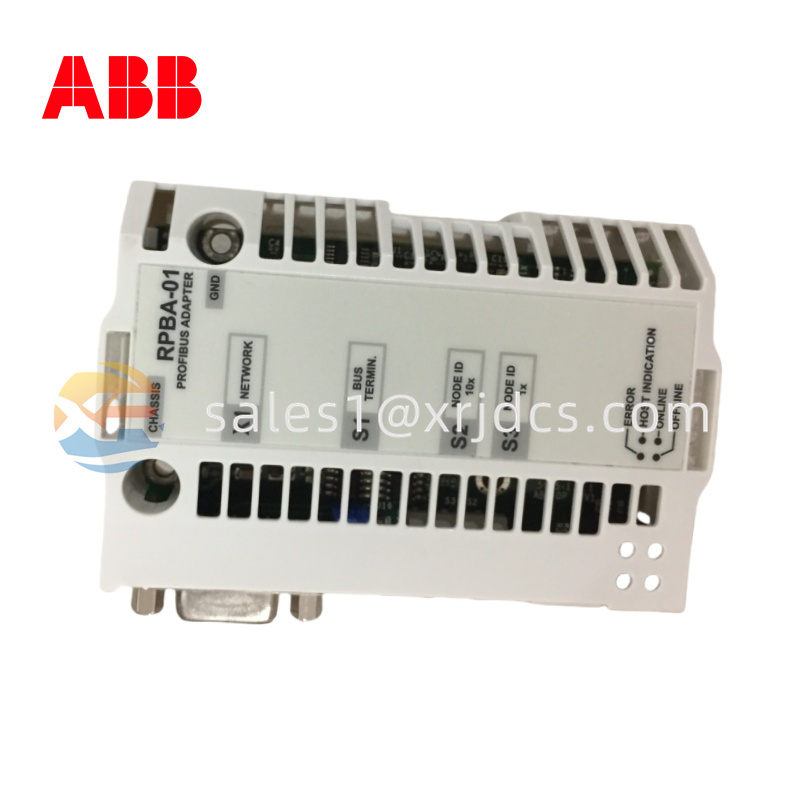
ABB RPBA-01 (C2500843) – PROFIBUS Adapter Module
Product Introduction
The ABB RPBA-01 (C2500843) is a compact and versatile PROFIBUS DP adapter module designed to interface ABB drives and automation equipment with PROFIBUS-based control networks. With strong communication stability, robust industrial-grade construction, and seamless integration capabilities, this module offers reliable data exchange for complex automation environments.
Functional Highlights
-
PROFIBUS DP communication support, enabling high-speed and deterministic data transmission.
-
Direct integration with ABB AC and DC drives, supporting configuration and real-time monitoring.
-
Durable construction suitable for industrial vibration, temperature fluctuations, and electrical noise.
-
Advanced diagnostic capabilities, including network and device status indicators.
-
Flexible configuration options through ABB tools and PROFIBUS master systems.
-
Fail-safe communication mechanisms to enhance system continuity during network disturbances.
Structural Design
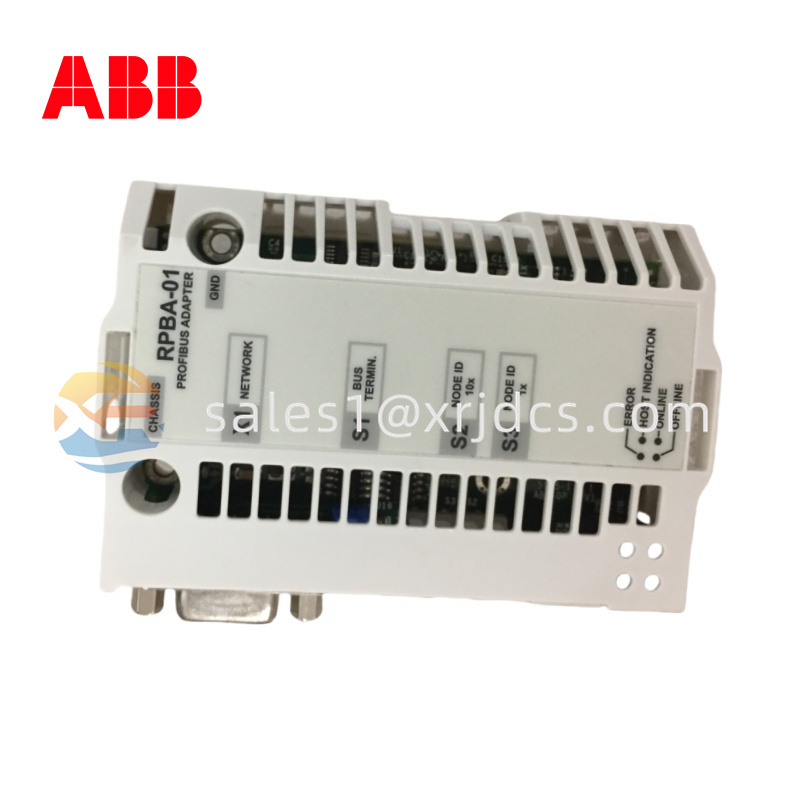
The RPBA-01 is built around an industrial-grade PCB and robust communication circuitry. Key structural components include:
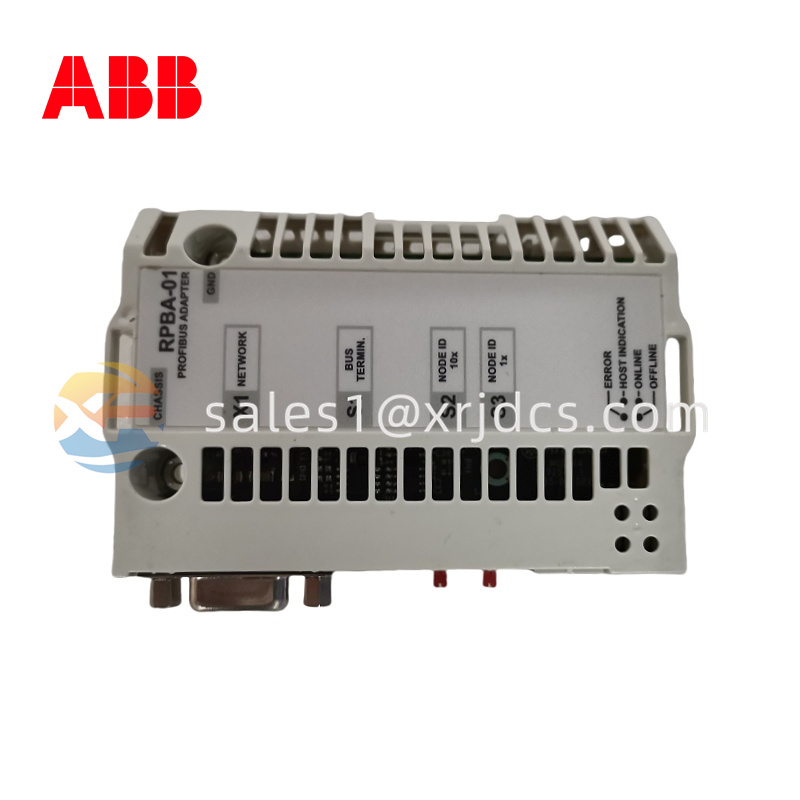
PROFIBUS DP interface port with shielded connectors
Integrated opto-isolation for improved electrical safety
Status LED indicators for RUN, ERROR, and BUS activity
Reinforced terminal base ensuring reliable mechanical engagement
Compact module housing optimized for control cabinet environments
This design ensures the module provides consistent communication even under intensive operation.
Technical Parameters
Communication Protocol: PROFIBUS DP
Data Rate: Up to 12 Mbit/s
Supported Profiles: DP-V0 and DP-V1
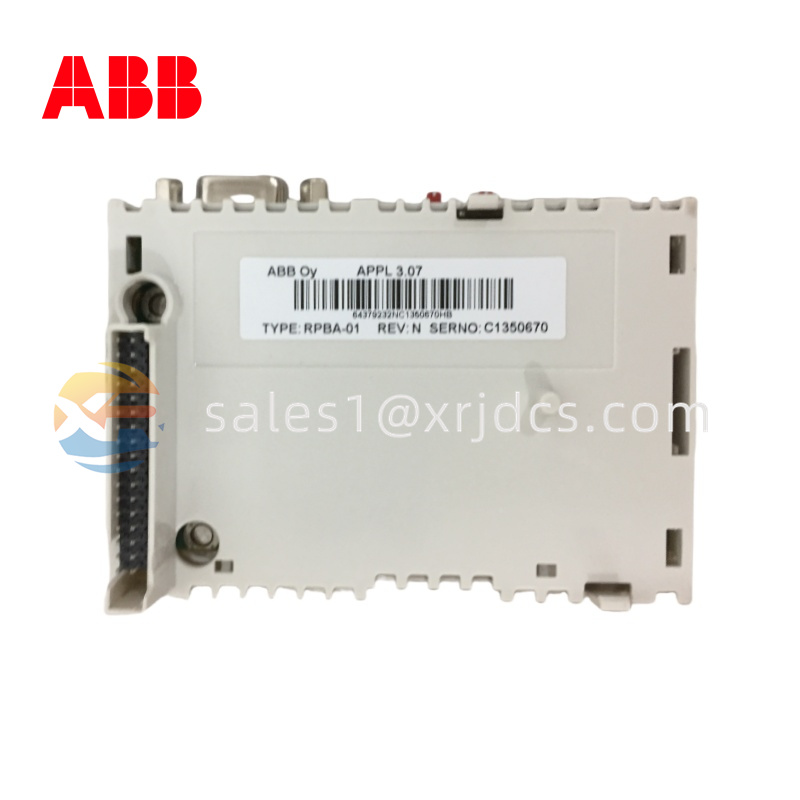
Module Code: RPBA-01
ABB Part Number: C2500843
Isolation: Optical isolation between fieldbus and device circuitry
Power Supply: Via host device (typical ABB drive supply)
Operating Temperature: –10°C to +55°C
Mounting: Plug-in installation within ABB drive communication slots
Application Domains
The ABB RPBA-01 module is widely used anywhere PROFIBUS connectivity is required:
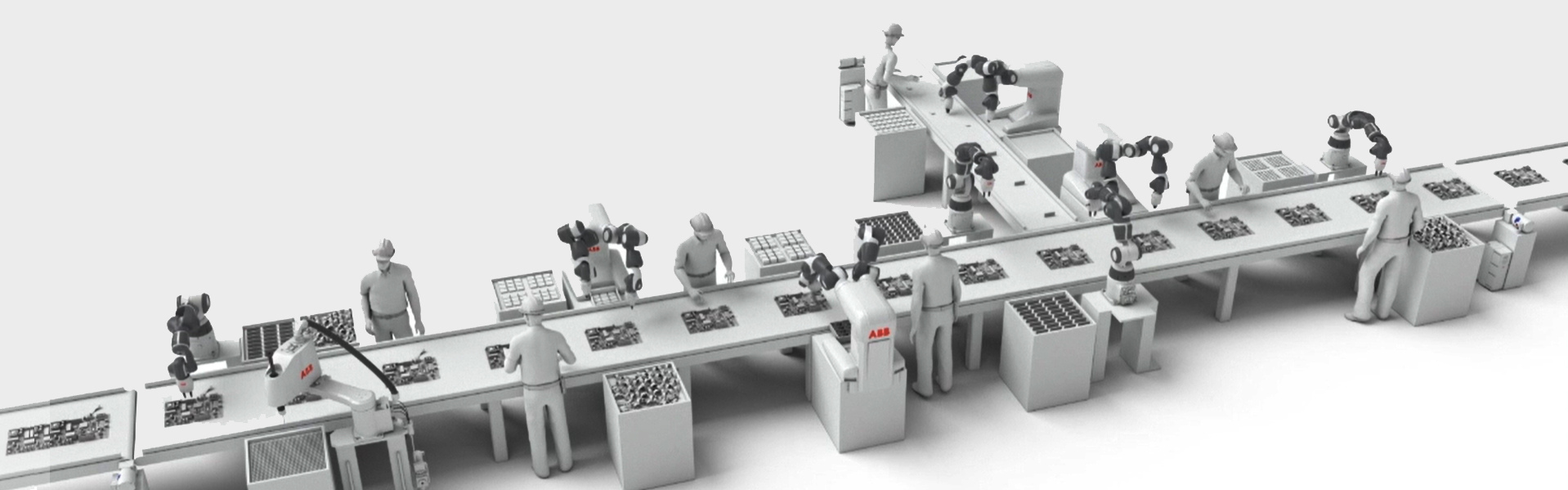
Manufacturing and assembly automation
Conveyor and material-handling systems
Process industries such as chemical, pulp & paper, food, and metals
Facility-level automation networks
Multi-axis motion control systems
Distributed I/O and PLC-drive communication frameworks
Its ability to integrate ABB drives into established PROFIBUS networks makes it especially valuable for both new installations and modernization projects.
Installation & Maintenance
Installation Steps
Power off the drive or host device before inserting the module.
Slide the RPBA-01 into the designated communication slot until firmly latched.
Connect the PROFIBUS cable to the D-sub interface, ensuring proper shielding.
Configure PROFIBUS parameters (address, baud rate, etc.) through ABB tools or master configuration software.
Power on the system and verify LED status indicators.
Maintenance Recommendations
Periodically check connectors for mechanical wear or loose shielding.
Monitor LED signals to detect communication faults early.
Keep the module in a clean, dry cabinet environment for optimal performance.
Update drive firmware when recommended for compatibility improvements.
Additional Notes
The RPBA-01 (C2500843) serves as a crucial link between ABB devices and PROFIBUS automation systems, providing stable communication over long distances and under heavy industrial loads. It is engineered to maximize interoperability, streamline diagnostics, and reduce overall commissioning time in automation networks.



 Switzerland
 .jpg)
.jpg)
.jpg)