ABB REC670 – High-End Feeder & Line Protection IED
1. Introduction
The ABB REC670 is a flagship Intelligent Electronic Device (IED) from ABB’s renowned Relion® 670 series. Designed for complex medium- and high-voltage feeder applications, it provides advanced protection, control, measurement, and supervision functions with exceptional reliability. Built on a modular architecture, the REC670 delivers comprehensive protection for overhead lines, underground cables, busbars, transformers, and distribution systems.
2. Key Technical Specifications
| Parameter |
Description |
| Model |
REC670 |
| Product Series |
ABB Relion® 670 |
| Primary Function |
Feeder & line protection, control, and monitoring |
| Power Supply |
24/48/60/110/125 V DC (module-dependent) |
| Communication Protocols |
IEC 61850, GOOSE, IEC 60870-5-103, DNP3, Modbus |
| Measurement Inputs |
Multiple CT/VT inputs for 3-phase measurement |
| Protection Functions |
Overcurrent, distance, earth-fault, breaker failure, synchrocheck, etc. |
| Mounting |
19-inch rack or panel flush mount |
| Operating Temperature |
–25°C to +55°C |
| Certifications |
IEC, CE, and utility-grade compliance |
3. Major Features
High-performance protection suite
Offers distance protection, directional/ non-directional overcurrent, earth-fault, auto-reclosing, breaker failure, and sync-check functions.
IEC 61850 native design
Full GOOSE messaging, process bus support, and interoperability with modern digital substations.
Modular hardware and scalable configuration
Flexible I/O modules, communication cards, and function blocks to fit complex grid requirements.
Fast, reliable fault clearing
High-speed algorithms ensure rapid response to minimize equipment damage and grid disturbance.
Advanced monitoring & analysis
Includes disturbance recorder, event logger, fault locator, oscillography, and thermal monitoring.
Robust cybersecurity
Implements modern security features to safeguard substation communication.
4. Structural Composition
The REC670 is engineered with a modular, service-friendly design:
Central processing unit (CPU) handling all protection and control logic.
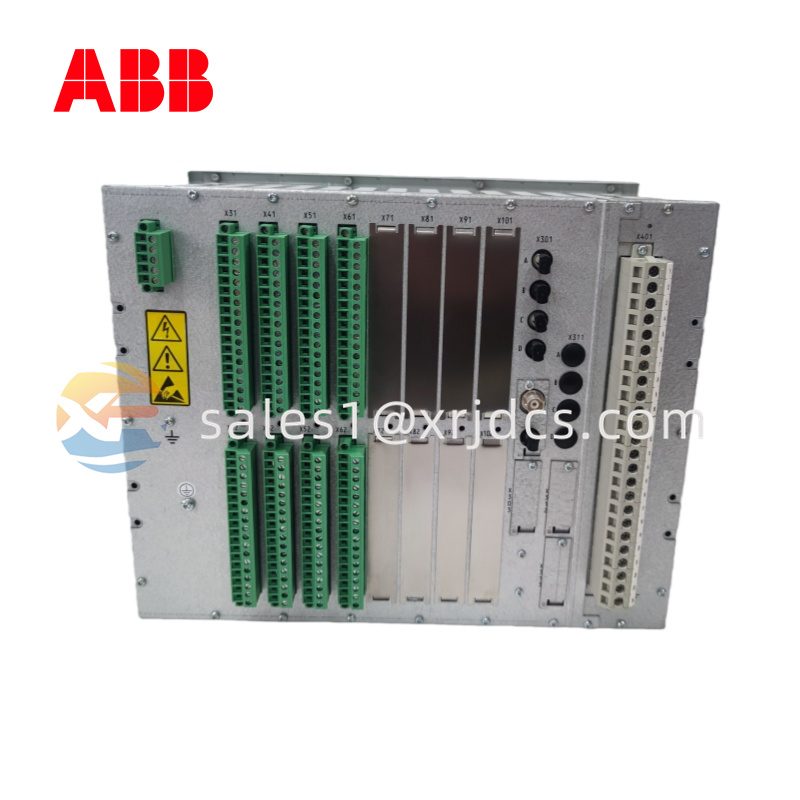
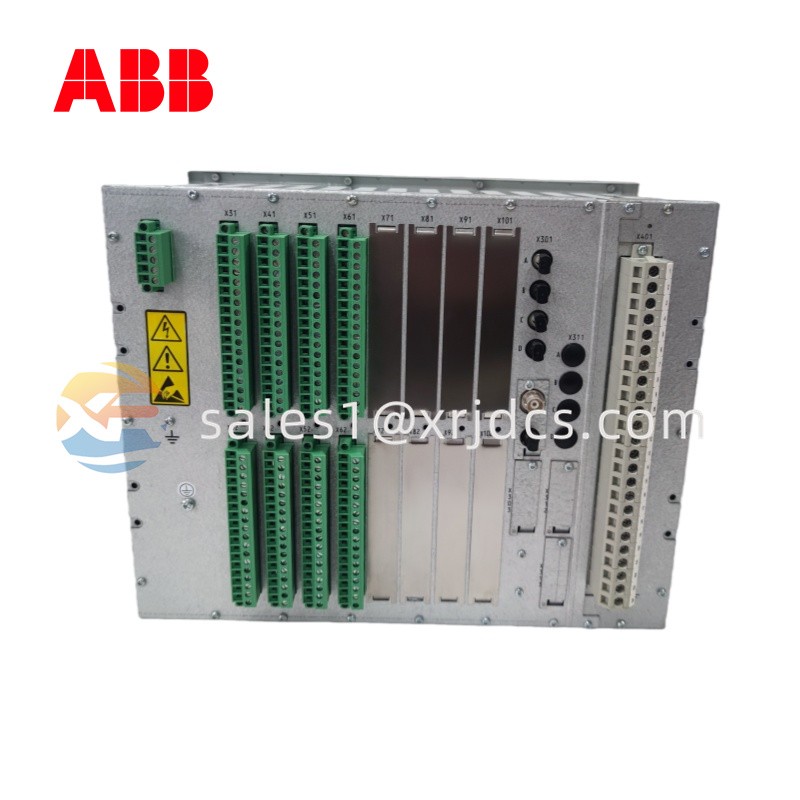
Expandable I/O modules supporting analog, digital, trip, and signaling interfaces.
Communication boards for multi-protocol substation networking.
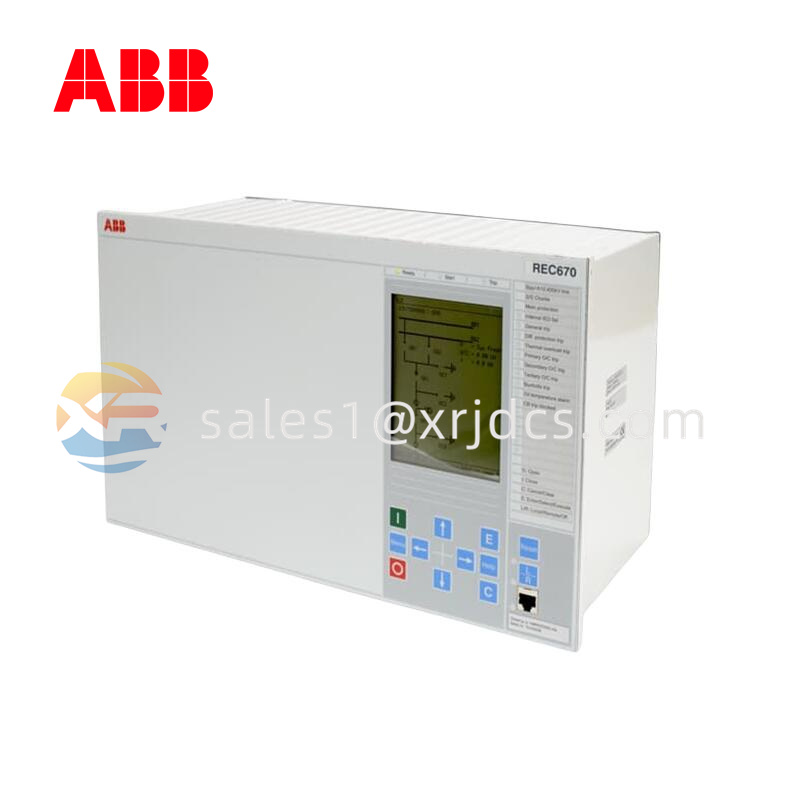
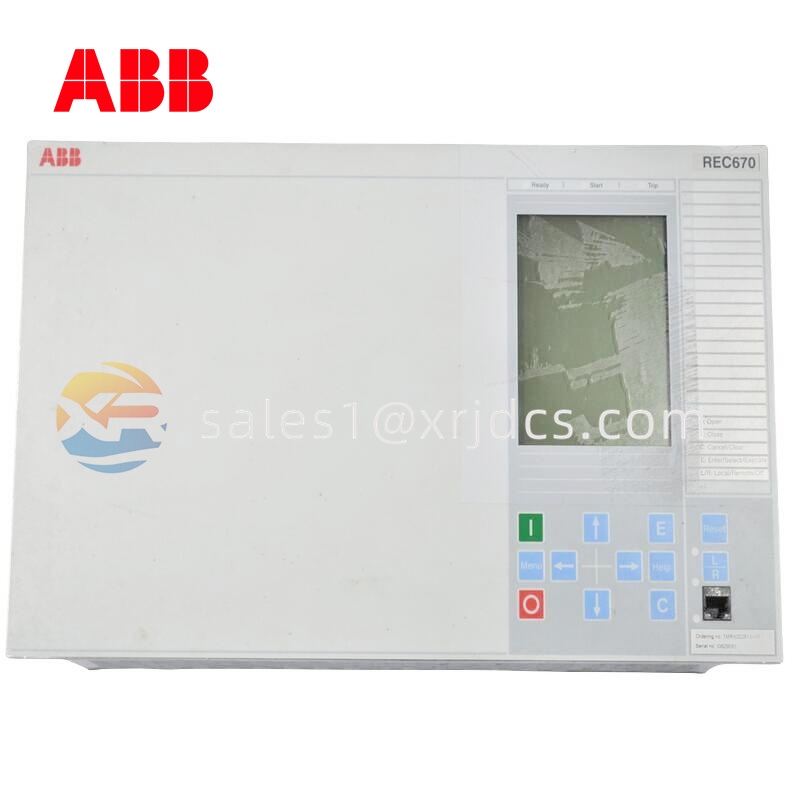
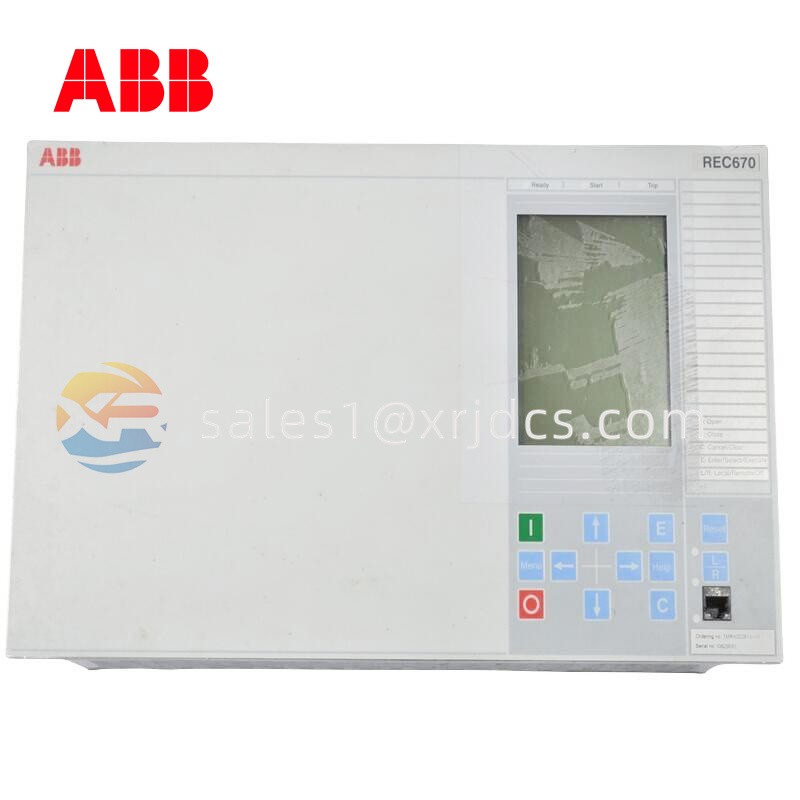
Front-panel HMI with LCD display and keypad for local control and configuration.
Industrial-grade enclosure providing excellent EMC resistance and mechanical durability.
This architecture allows system engineers to tailor the IED specifically to each substation's protection philosophy.
5. Application Fields
The versatility of the REC670 makes it suitable for:
High-voltage overhead transmission lines
Sub-transmission and distribution feeders
Underground cable protection
Industrial power networks
Smart grid and IEC 61850 digital substations
Transformer and busbar backup protection
Renewable energy integration points
Its wide feature set makes it one of the most capable and flexible protection IEDs in ABB’s portfolio.
6. Installation Guidelines
Install in a standard 19-inch rack or mount flush on a panel surface.
Ensure adequate spacing for cooling and rear cable access.
Follow ABB wiring recommendations for CT/VT inputs to avoid saturation and measurement distortions.
Synchronize communication settings when using IEC 61850 to ensure correct GOOSE/data exchange.
Perform device testing with ABB PCM600 software before energizing the system.
7. Maintenance & Operation Tips
Periodically review event logs and disturbance recordings for early detection of network anomalies.
Check the tightness of terminal connections, especially in high-vibration substations.
Keep firmware updated per ABB support guidelines to ensure security and reliability.
Use built-in self-diagnostic tools to assess module status and detect hardware issues.
Store and back up configuration files regularly for fast recovery if module replacement is needed.
8. Additional Notes
The REC670 is widely recognized in the power industry for its stability, precision, and grid-grade design. When paired with other ABB Relion® devices and modern SCADA/DCS systems, it forms a cornerstone of advanced, resilient substation automation.




 Switzerland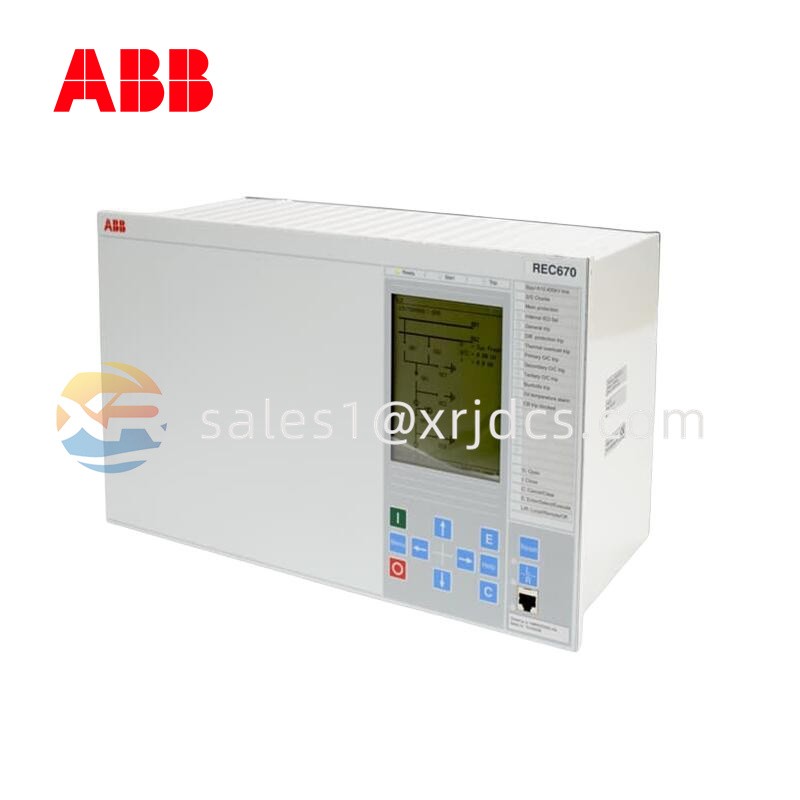
.jpg)
.jpg)
.jpg)