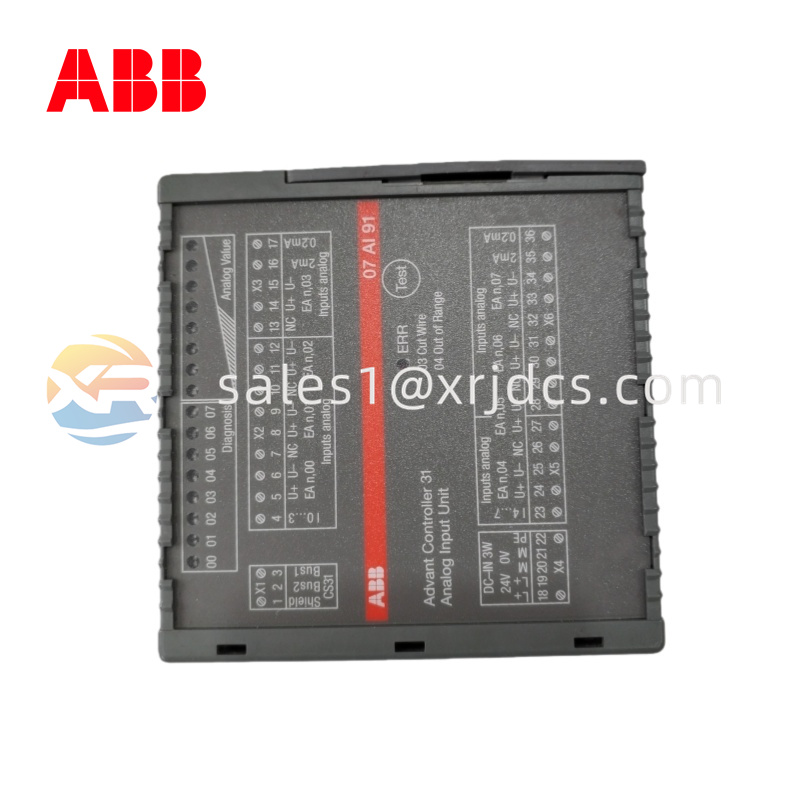
ABB 07AI91 Process Automation Controller Module
Overview
The ABB 07AI91 is a specialized, high-density analog input module designed for integration within ABB’s Advant/AC 800F, MOD 300, or S800 I/O series automation systems. This module acts as a critical interface, converting real-world analog signals from field sensors—such as temperature transmitters, pressure transducers, and flow meters—into precise digital data for the central process control unit. Engineered for industrial-grade reliability, it ensures accurate measurement and monitoring in continuous process industries.
Structure and Physical Composition
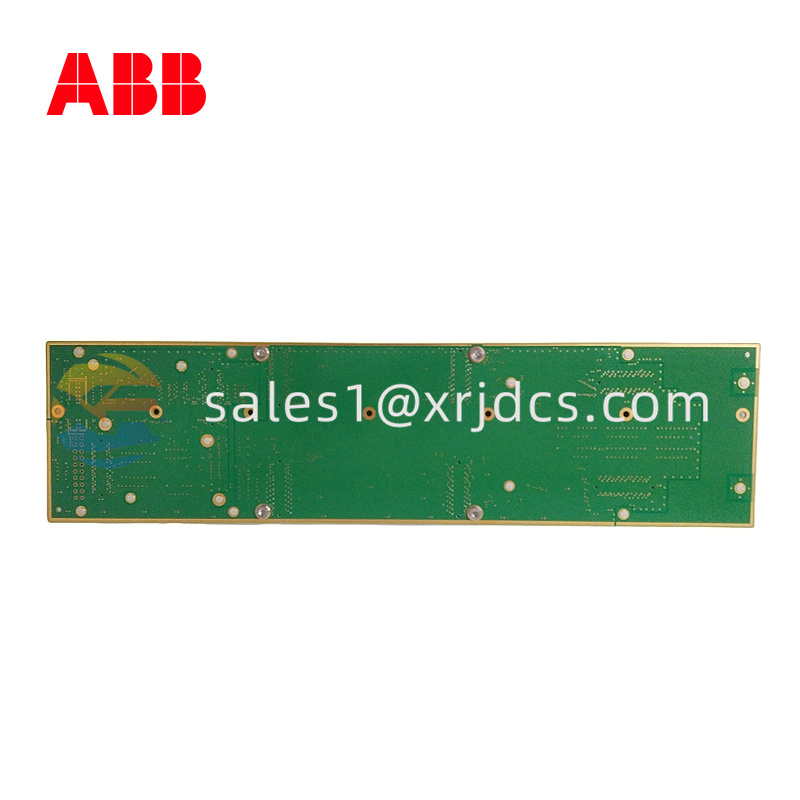
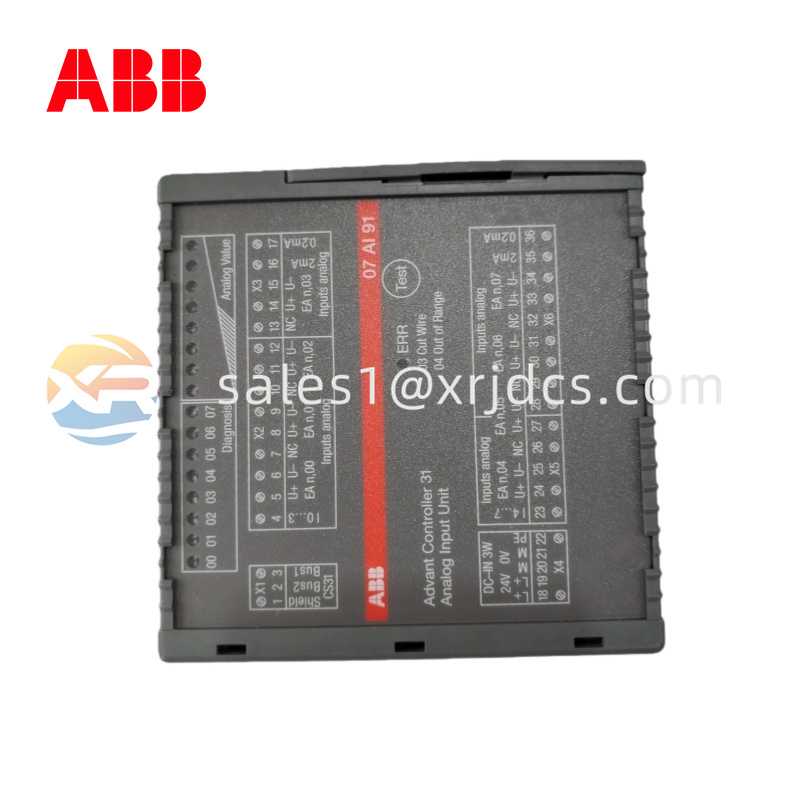
Housed in a rugged, modular metal casing designed for DIN rail mounting, the 07AI91 is built to withstand the electrical noise and vibration common in industrial environments. Internally, it comprises high-precision analog-to-digital converters (ADCs), signal conditioning circuits, galvanic isolation barriers, and a microprocessor for communication and diagnostics. Its front features clearly labeled terminal blocks or connectors for field wiring and status LEDs for power, communication, and channel activity. The module slots directly into a compatible I/O station or base unit.
Primary Application Sectors
This module is a fundamental component in distributed control systems (DCS) across various sectors:
Oil & Gas and Petrochemical: Monitoring pressure, temperature, and level in refineries, pipelines, and offshore platforms.
Power Generation: Acquiring data from sensors in boilers, turbines, and emission control systems.
Pharmaceutical and Biotechnology: Precise monitoring of critical process parameters in bioreactors and clean utilities.
Pulp and Paper: Controlling consistency, flow rates, and chemical addition stages.
Water and Wastewater Treatment: Measuring pH, conductivity, tank levels, and flow.
Detailed Technical Specifications
The ABB 07AI91 provides versatile input capabilities with high resolution and accuracy.
Input Channels: Typically 8 or 16 channels (depends on specific variant), configurable per channel.
Signal Types: Accepts standard analog inputs: 4-20 mA (current), 0-10 V, 0-5 V, 1-5 V (voltage), and resistance inputs (e.g., for RTDs). Thermocouple (mV) support may be available in other variants.
Input Resolution: High-resolution conversion (e.g., 16-bit) for precise measurement.
Accuracy: High accuracy, typically within ±0.1% of full scale under defined conditions.
Galvanic Isolation: Channel-to-channel and channel-to-system isolation to prevent ground loops and noise interference.
Communication: Interfaces via the backplane bus (e.g., Profibus DP, Foundation Fieldbus, or ABB’s proprietary network) to the main controller.
Power Supply: Powered by the system backplane (e.g., 24 V DC).
Operating Temperature: Rated for industrial environments, e.g., 0 to 60°C (32 to 140°F).
Distinctive Features and Advantages
High Channel Density: Maximizes I/O count per module, saving cabinet space and reducing overall system cost.
Flexible Configuration: Each channel can be independently configured via control software for different signal types and ranges, simplifying spares management.
Integrated Diagnostics: Features comprehensive self-diagnostics and channel-level fault reporting (e.g., wire break, short circuit, out-of-range) for predictive maintenance.
Robust Electromagnetic Compatibility (EMC): Designed to meet stringent industrial EMC standards, ensuring stable operation in electrically noisy plants.
Hot Swappable Capability: In many compatible systems, modules can be replaced without shutting down the entire process, enhancing availability.
Installation, Configuration, and Maintenance
Installation: Mount the module firmly on its designated base unit or DIN rail within a control cabinet. Ensure proper grounding. Connect field sensor wires to the correct terminals as per the wiring diagram, observing polarity for current loops. Secure all connections.
Configuration: Using ABB’s engineering tool (e.g., Control Builder), define the module in the system hardware configuration. For each channel, set the signal type, measurement range, filter time, alarm limits, and engineering units.
Maintenance: Regular maintenance primarily involves checking the integrity of field wiring connections. Monitor the module's diagnostic status via the control system’s asset management or diagnostic software. Keep the module and surrounding area free of dust and contaminants. Replacement should be performed with an identical or approved compatible module, ensuring the system is in a safe state or supports hot swap.




 Switzerland
 .jpg)
.jpg)
.jpg)