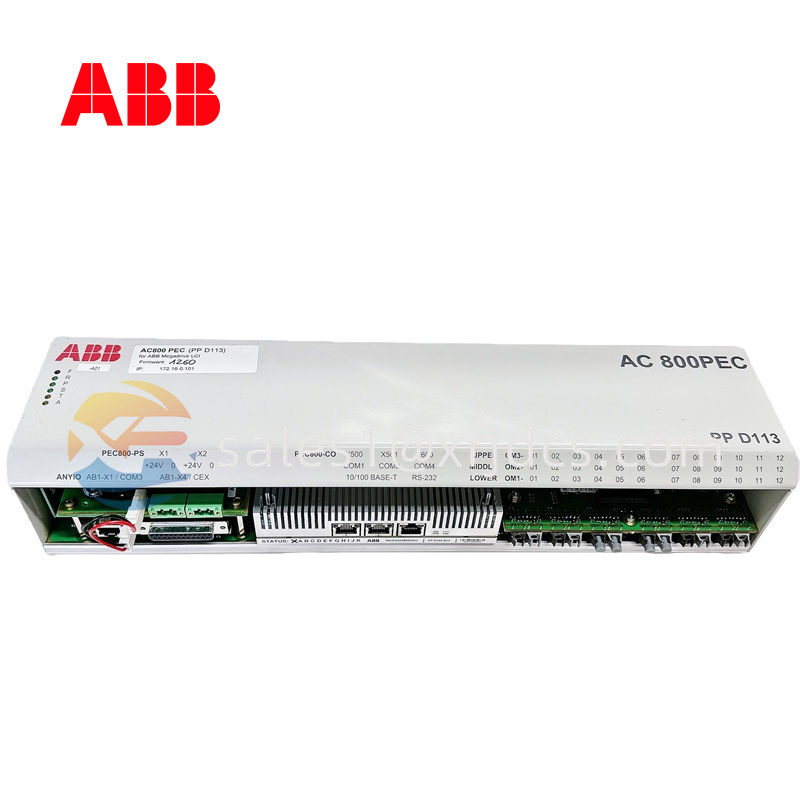
Product Overview
The ABB UDC920BE01 3BHE034863R0001 is an industrial automation module commonly described by component suppliers as an analog input module. It is designed to receive process signals from field devices and make that information available to a compatible ABB control system.
The module is suitable for applications where accurate field-signal acquisition is required. It can therefore serve as an important interface between sensors and the higher-level control architecture.
Product Specifications
| Parameter |
Description |
| Manufacturer |
ABB |
| Model |
UDC920BE01 |
| Order Number |
3BHE034863R0001 |
| Product Type |
Analog Input Module |
| Function |
Analog signal acquisition and processing |
| Application |
Industrial automation and process control |
| Installation |
Integrated control-system hardware |
| Typical Signals |
Current or voltage analog signals |
| Reported Weight |
Approx. 1.23 kg in one supplier listing |
Some third-party sources describe the module differently, including as a controller, communication/I/O interface, or high-voltage control module. Therefore, detailed channel counts, input ranges, communication interfaces, and electrical ratings should be verified against the actual ABB system documentation before installation.
Signal Acquisition
The primary role reported for the UDC920BE01 is analog signal acquisition. In an industrial process, sensors may continuously generate electrical signals representing temperature, pressure, flow, level, or other process variables.
The module can provide an interface between these field signals and the control system. As a result, reliable signal acquisition can support monitoring, process regulation, alarms, and other automation functions.
This makes the UDC920BE01 relevant to control architectures where accurate process feedback is required.
Hardware Characteristics
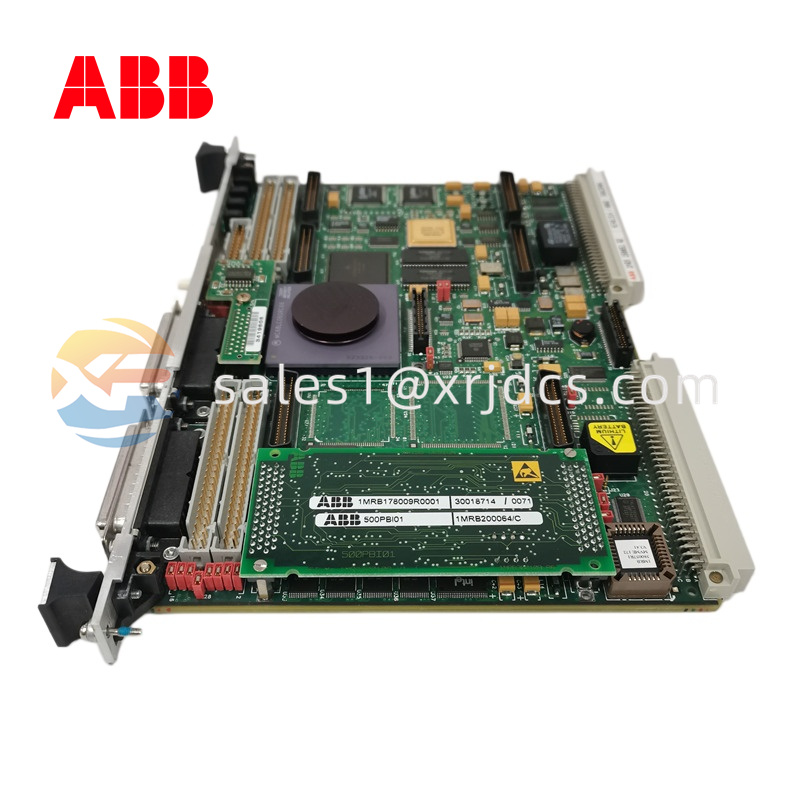
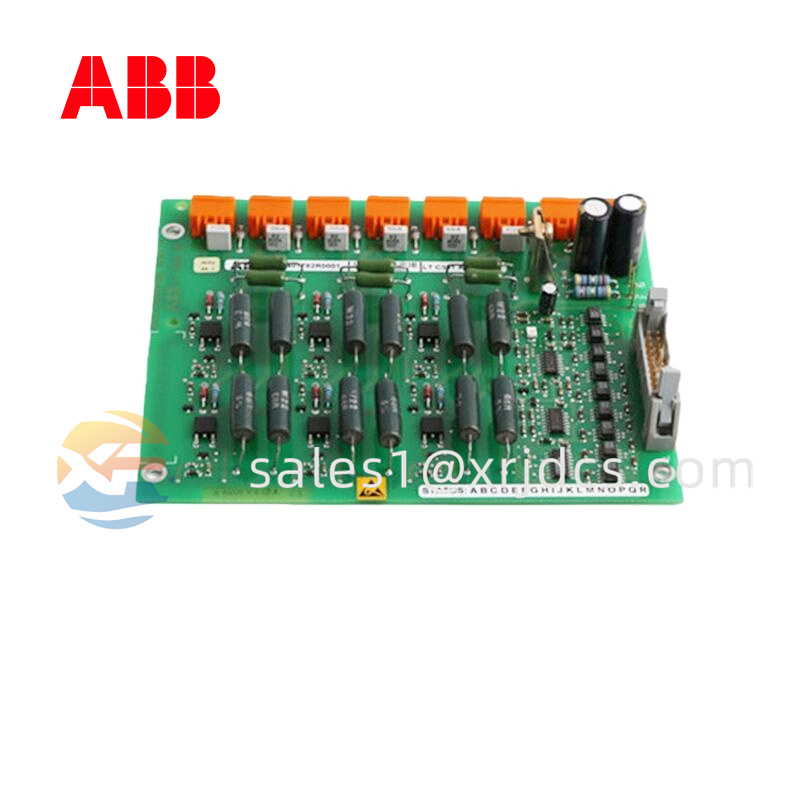
The UDC920BE01 is designed as an integrated electronic module. Its hardware incorporates a circuit-board assembly, electronic signal-processing circuitry, connection interfaces, and supporting components.
Its modular construction is useful for maintenance because a faulty unit can potentially be replaced without redesigning the complete control system.
When sourcing a replacement, technicians should compare:
- Complete model number
- ABB order number
- Hardware revision
- Connector configuration
- Physical dimensions
- Host-system compatibility
The 3BHE034863R0001 identifier should be checked carefully because different third-party listings currently provide inconsistent technical descriptions for this model.
Industrial Applications
The module can be considered for a variety of industrial automation environments, particularly systems requiring continuous analog process information.
Potential applications include:
- Process control
- Manufacturing automation
- Energy and power systems
- Chemical processing
- Production-line monitoring
- Industrial instrumentation
- DCS and PLC-related installations
- Legacy ABB equipment refurbishment
For example, analog signals from temperature, pressure, and flow instrumentation can be integrated into a broader control architecture for monitoring and process management.
Installation and Maintenance
Before replacing the UDC920BE01, isolate the relevant equipment and follow the electrical safety procedures specified for the host system. Record the existing connections before removing the installed module.
After installation, check every connector and wiring connection carefully. Then inspect the module for correct seating before restoring power. Functional testing should follow the commissioning procedure for the specific ABB control system.
For spare-parts storage, use anti-static packaging and keep the module in a clean, dry environment. Avoid excessive humidity, dust, vibration, and electrostatic discharge.
Compatibility note: Publicly available information for UDC920BE01 / 3BHE034863R0001 is not fully consistent. The product identification is well established, but exact electrical and I/O specifications should be confirmed from the original ABB documentation or the installed equipment before purchase and replacement.




 Switzerland
 .jpg)